
- توضیحات
- نوشته شده توسط Super User
- دسته: English
- بازدید: 181
سیاستهای نژادپرستانه رژیم تروریستی ایران علیه ملت آزربایجان روزبهروز تشدید میشود.
فعالان تُرک آزربایجان جنوبی که در برابر این سیاستهای تبعیضآمیز ایستادگی میکنند، با بازداشتهای سنگین، شکنجه و در برخی موارد حتی ترور فیزیکی مواجه میشوند.
با وجود این فشارها، فعالان آزربایجان با پافشاری بر دفاع از حقوق ملی خود همچنان به مبارزه علیه رژیم نژادپرست و تروریستی ایران ادامه میدهند.
رژیم تمامیتخواه ایران، برای شکستن اراده این فعالان، با اتهامات ساختگی و صدور احکام سنگین تلاش دارد فضای رعب ایجاد کرده و جنبش ملی آذربایجان را خاموش کند.
اما در برابر این تهدیدها، فعالان ملی دست به اعتصاب غذا زده و مسیر مقاومت را ادامه میدهند.
شورای همکاری سازمانهای آزربایجان جنوبی (گاتَش) با اعلام حمایت از این فعالان قهرمان اعلام میکند:
تمامی زندانیان سیاسی ـ از جمله همه فعالان تُرک ـ باید بیقید و شرط آزاد شوند.
گاتَش از سازمانهای بینالمللی میخواهد برای آزادی این فعالان، فشارهای سیاسی و اقتصادی بر رژیم نژادپرست و تروریستی ایران را افزایش دهند.
گاتَش مردم آزربایجان جنوبی و تمامی ملت تُرک را فرامیخواند که از زندانیان ملی حمایت کنند.
ای آزربایجان! از فرزندان قهرمان خود که برای حقوق ملیات جانِ خویش را به خطر انداختهاند، پشتیبانی کن!
آزادی آنان به اراده تو وابسته است.
خیابانها و مقابل زندانها را به صحنه اعتراض برای آزادی زندانیان سیاسیمان تبدیل کنیم!
شورای همکاری سازمانهای آذربایجان جنوبی (گاتَش)
۲۱ نوامبر ۲۰۲۵
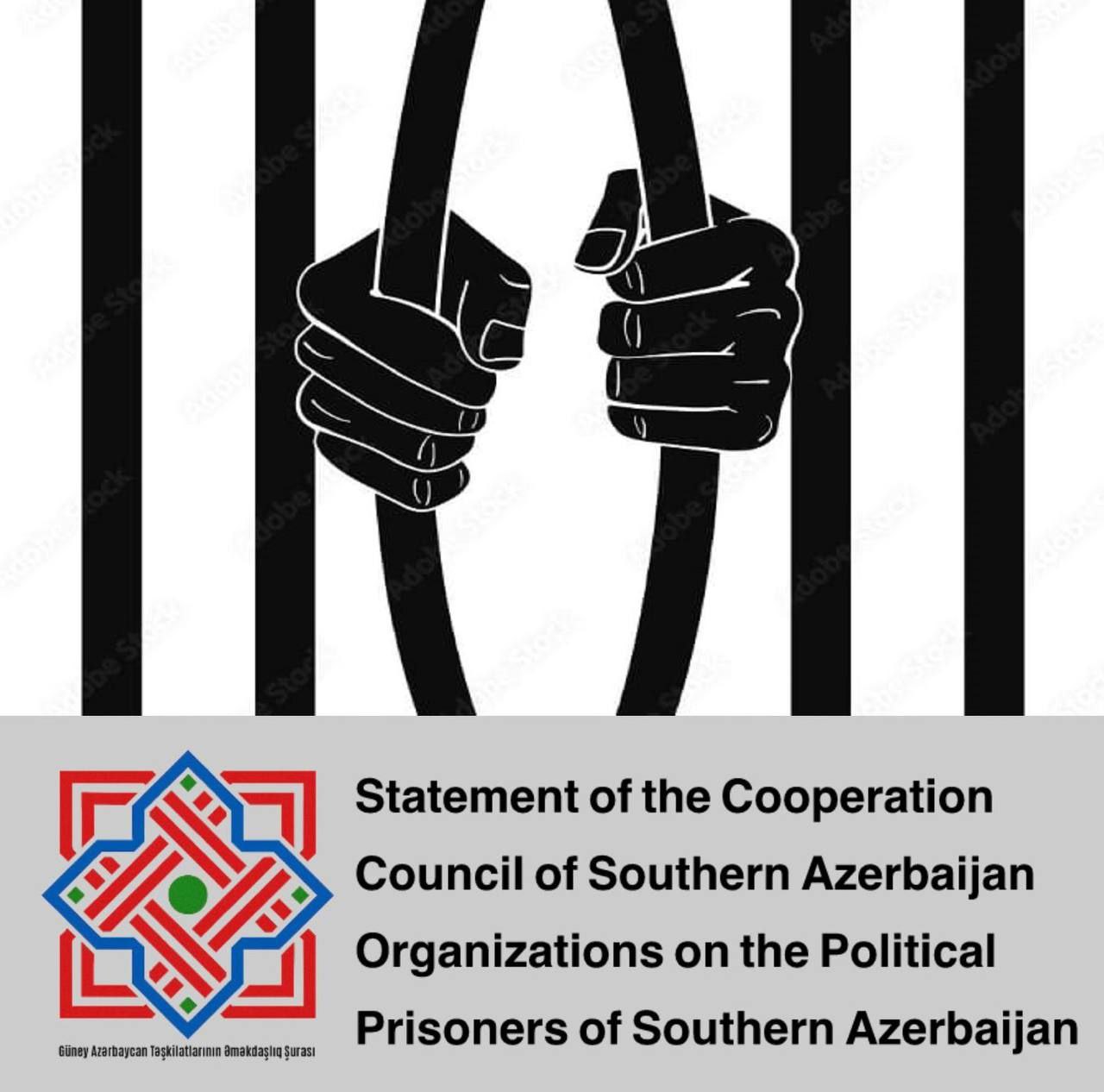
Statement of the Cooperation Council of Southern Azerbaijan Organizations on the Political Prisoners of Southern Azerbaijan
The racist policies of the Iranian terrorist regime against the Azerbaijani nation are intensifying day by day.
Southern Azerbaijani Turk activists who stand against these discriminatory policies face heavy imprisonment, torture, and in some cases even physical assassination.
Despite these pressures, Azerbaijani activists continue their struggle against the racist and terrorist Iranian regime with determination to defend their national rights.
The totalitarian regime of Iran, in an attempt to break the will of these activists, seeks to create an atmosphere of fear and silence the National Movement of Azerbaijan by fabricating charges and issuing harsh sentences.
Yet in the face of these threats, national activists have launched hunger strikes and continue their path of resistance.
The Cooperation Council of Southern Azerbaijan Organizations (GATƏŞ) declares its support for these heroic activists and states:
All political prisoners — including all Turk activists — must be released unconditionally.
GATƏŞ calls on international organizations to increase political and economic pressure on the racist and terrorist Iranian regime for the release of these activists.
GATƏŞ urges the people of Southern Azerbaijan and the entire Turkic nation to support the national prisoners.
Azerbaijan! Stand with your heroic sons and daughters who have risked their lives for your national rights!
Their freedom depends on your resolve.
Let us turn the streets and the fronts of prisons into arenas of protest for the freedom of our political prisoners!
Cooperation Council of Southern Azerbaijan Organizations (GATƏŞ)
21 November 2025
Güney Azərbaycanlı Tutuqlularla Bağlı Güney Azərbaycan Təşkilatları Əməkdaşlıq Şurası’nın Bildirisi
İran terror rejiminin Azərbaycan xalqına qarşı irqçi siyasəti gündən-günə artmaqdadır.
Bu irqçi siyasətə qarşı olan Güney Azərbaycan Türk aktivistləri ağır həbs, işkəncə və bəzi hallarda fiziki trrora məruz qalırlar.
Bu baskılara rəğmən Azərbaycan aktivistləri öz milli haqlarının müdafiəsində israrla dayanıb, İran irqçi terror rejiminə qarşı mübarizəyə davam etməkdədir.
Bunların iradəsini sındırmaq istəyən İran totaliter rejimi milli aktivistlərə qarşı qondarma ittihamlarla aşırı hökmlər tətbiq edərək qorxu yaradıb, Azərbaycan Milli Hərəkatını susdurmaq niyyətindədir.
Lakin bu təhdidlərin qarşısında dik duran milli fəallar aclıq aksiyası başlataraq dirənişə davam etməkdədir.
Güney Azərbaycan Təşkilatları Əməkdaşlıq Şurası (GATƏŞ) bu qəhrəman fəallardan himayəsini bildirib elan edir ki;
Bütün siyasi məhbuslar – o cümlədən bütün Türk aktivistləri – qeydsiz-şərtsiz azadlığa buraxılmalıdır.
GATƏŞ bu fealların azadlığı üçün beynəlxalq təşkilatlardan İran irqçi terror rejiminə qarşı siyasi iqtisadi basqıların artırılmasını tələb edir.
GATƏŞ Güney Azərbaycanlıları və bütün Türk millətini milli məhbuslardan müdafiə etməyə çağırır.
Milli haqqlarımız üçün öz canlarını riskə atan qəhrəman övladlarına sahib çıx, Ey Azərbaycan!
Onların azadlığı sənin iradəndən asılıdır. Xiyabanları və həbsxanaların önünü siyasi məhbuslarımzın azadlığı üçün etiraz səhnəsinə çevirək!
Güney Azərbaycan Təşkilatları Əməkdaşlıq Şurası (GATƏŞ)
21/noyabr/2025
- توضیحات
- نوشته شده توسط Super User
- دسته: English
- بازدید: 256
In the Islamic Republic of Iran, the Constitution formally recognizes certain linguistic and cultural rights, yet the practical implementation of these rights often faces significant obstacles. A striking example is Article 15 of the Iranian Constitution, which declares Persian as the official language of the country while simultaneously permitting the use of local and ethnic languages in media and education. On paper, this seems like a progressive approach to cultural diversity, allowing various ethnic groups—such as Kurds, Azeris, Arabs, Baluchis, and others—to maintain and develop their linguistic heritage alongside the national language.
However, the reality is far more complex. Despite the clear legal framework, the execution of Article 15 has been limited, inconsistent, and, in some cases, actively suppressed. Local languages are rarely incorporated systematically into school curricula, and media outlets using these languages often face bureaucratic obstacles. Efforts to publish books, teach literature, or organize cultural programs in minority languages are often subject to strict state scrutiny, reflecting a tension between constitutional rights and the state’s perception of national security and unity.
This situation embodies what scholars call a political paradox: a law may formally grant rights, yet the same law exists within a political environment where its exercise is constrained. In the Iranian context, the paradox is clear—the Constitution recognizes linguistic diversity, but the political and security apparatus often treats its practical exercise as a potential threat. This tension is not merely theoretical. Teachers, writers, and cultural activists advocating minority language education often encounter administrative barriers, censorship, or other forms of restriction. Consequently, a right that is legal on paper is not always a right in practice.
The roots of this paradox lie in the dual imperatives of the state. On one hand, Iran’s government presents itself as a guarantor of cultural diversity and minority rights. On the other hand, the same government places strong emphasis on national unity and political stability, sometimes interpreting minority language activism as a challenge to these goals. This creates an implementation gap: policies and laws exist, but the political context limits their application. The result is a persistent tension between the principle of rights and the practice of governance, which defines the paradox.
From a broader perspective, this paradox has significant social and cultural consequences. The inability to fully exercise linguistic rights can contribute to feelings of marginalization among minority communities, undermining trust in national institutions. It also limits the intergenerational transmission of local languages, potentially endangering the survival of some linguistic traditions. Scholars of political science and human rights often highlight this as a common challenge in states where centralized authority and security concerns dominate over local cultural autonomy.
Despite these challenges, there have been some incremental advances. In certain regions, minority languages are used in local media or cultural events, and some schools offer elective courses in regional languages. Yet, these measures remain fragmented, highlighting the inconsistency between the constitutional promise and the lived reality. The ongoing discrepancy fuels debates among academics, journalists, and activists about how Iran can reconcile its constitutional commitments with its political and security priorities.
In conclusion, the case of linguistic rights in Iran exemplifies a broader phenomenon known as a political paradox. While the Constitution formally guarantees certain freedoms, including the use of local and ethnic languages, practical constraints, political considerations, and security concerns often limit their realization.
Article 15 embodies both the promise of cultural pluralism and the challenges of implementing it in a centralized political system. For observers and advocates, the key question remains: how can a state reconcile legal recognition of diversity with political structures that prioritize uniformity and control? Understanding this paradox is essential for analyzing not only Iran’s linguistic policies but also broader tensions between law, rights, and politics in contemporary states.
- توضیحات
- نوشته شده توسط Super User
- دسته: English
- بازدید: 152
The Lake That Dried Up,
The Identity That Was Ignored
A Critique of Systemic Discrimination, Centralism, and Political Silence Regarding the Urmia Lake Disaster
Introduction:
The Drying Lake, The Wilting of a Nation
Urmia Lake, once one of the largest saltwater lakes in the world, has been steadily drying over recent decades. This is not merely an environmental tragedy, but a bitter symbol of systemic neglect of the demands and identity of the people who live in this region. For many Azerbaijanis, Urmia Lake was more than a source of water and nature — it was a symbol of life, cultural identity, and pride. However, the environmental disaster has become a sign of ethnic, political, and social marginalization, as both the Islamic Republic and much of the opposition have largely ignored it.
Major Contradictions in National Water Policy
In recent years, a massive project has been underway to transfer water from the Oman Sea to Isfahan province at a cost exceeding $500 million annually to revive agriculture. Meanwhile, the total annual agricultural income of Isfahan is estimated at about $150 million.
This project does not appear economically rational or sustainable.
In contrast, Urmia Lake, which plays a vital role in the region’s ecosystem and people’s lives, has received almost no adequate or sustained funding.
The simple question remains:
Why is massive funding devoted to a project with questionable economic justification, while the rescue of a lake of national and international importance is neglected?
The answer is clear: priority in policymaking lies with Persian-speaking central regions, while peripheral, Turkic-speaking regions remain marginalized.
Structural Discrimination and Repression
For years, Azerbaijanis have engaged in civil protests, awareness campaigns, open letters, and symbolic strikes demanding action to save Urmia Lake. But how has the Islamic Republic responded? Arresting and imprisoning environmental activists, suppressing peaceful protests, issuing harsh sentences, and closing civic spaces.
Many Azerbaijani activists are imprisoned solely for defending their rights to life, environment, and cultural identity. This is not only an environmental issue but a blatant violation of human rights and civil liberties.
Meaningful Silence of the Persian-Language Opposition
Despite the urgency of the Urmia Lake crisis, the Persian-speaking opposition outside Iran, claiming to represent the Iranian people, has systematically overlooked this issue. Prominent media such as BBC Persian, Iran International, Radio Farda, and Manoto rarely provide deep, sustained coverage of the crisis.
Many political activists abroad who claim to represent Iran still hold a Persian-centric worldview, treating the problems of ethnic and Turkic-speaking regions as “ethnic issues” separate from Iran’s national crisis. This mindset has further silenced the voices of Azerbaijanis even within opposition circles.
Roots of the Crisis: Identity Denial and Systemic Discrimination
The drying of Urmia Lake is not only an environmental problem but a reflection of decades of uneven development policies, denial of Turkic language and culture, and political and economic marginalization.
Absence of education in the Azerbaijani mother tongue
Minimal representation in political and managerial decision-making
Distorted or negligible representation in national media
Unequal allocation of resources and budgets to Turkic-speaking areas
These factors have fostered feelings of deprivation, distrust, and alienation among the local population, deepening the lake’s crisis.
Legitimate Demands of Azerbaijani People
The Azerbaijani people and environmental activists demand:
1. Immediate release of all political and civil prisoners related to environmental protests.
2. Allocation of real, corruption-free funds for the full restoration of Urmia Lake.
3. Genuine involvement of local and indigenous people in decision-making about their environment and regional development.
4. An end to the securitized and repressive approach to peaceful environmental and cultural protests.
5. Fair and continuous media coverage of the Urmia Lake crisis in both domestic and opposition outlets.
6. Full recognition of the cultural and linguistic rights of Turkic-speaking people, including education and media in their mother tongue.
Disaster Beyond Nature
Urmia Lake can still be saved, but not through hollow promises and superficial plans. Only through real reforms, respect for ethnic identities, and democratic participation can the lake and lost trust be revived.
As long as discrimination and centralism persist, Urmia’s drought will continue — a drought not only of water, but of justice
- توضیحات
- نوشته شده توسط Super User
- دسته: English
- بازدید: 392
Peace in the South Caucasus, particularly between Azerbaijan and Armenia, represents an unprecedented opportunity to establish security, promote economic growth, and revive the cultural identity of the people in the region. Due to its sensitive geopolitical position, abundant natural resources, and vital transit routes, the South Caucasus has always been a center of regional and international competition. Over the past two decades, Azerbaijan has strengthened its position in the South Caucasus through investments in energy resources, the development of transportation and transit infrastructure, and the establishment of extensive diplomatic relations. Stability and security in the country not only reduce border and military threats but also facilitate foreign investment, the development of industrial projects, and the expansion of oil and gas exports. Transit routes and energy pipelines from the Caspian Sea to Europe are fundamental pillars of Azerbaijan’s economic independence, and any instability or foreign intervention can jeopardize these foundations.
The people of Southern Azerbaijan, who live in Iran and share language, culture, and history with the people of the South Caucasus, directly benefit from stability and development in the region. Economic, security, and social progress in the South Caucasus can provide the people of the south with motivation and support to preserve and strengthen their cultural identity, mother tongue, and participation in cross-border economic and cultural activities. This cultural and economic connection between the south and the South Caucasus is part of the historical and collective identity of Azerbaijanis, and strengthening it enhances the welfare, identity, and social freedom of the southern population. However, the Islamic Republic of Iran, concerned about the growing ethnic and cultural identity of Azerbaijanis and the potential loss of its influence, complicates and restricts the process of peace and development in the South Caucasus. Iran’s concerns are not about regional security or economic development but about controlling the identity and political autonomy of the Azerbaijani community within its borders.
One of the most prominent aspects of these policies is the discriminatory and Turkophobic approach of the Iranian government toward the people of Southern Azerbaijan. For years, the mother tongue, culture, and ethnic identity of the southern population have been under pressure. Restrictions on Turkish-language education, suppression of cultural and social activities, media control, and obstacles to cross-border communications are clear examples of these discriminatory policies. These measures not only violate basic human rights but also attempt to sever cultural and economic ties between the southern population and the South Caucasus. Iran’s Turkophobic policies have caused the people of Southern Azerbaijan to feel deprived, treated unjustly, and restricted in their identity, while the people of the South Caucasus, under peace and development, enjoy greater opportunities for cultural and economic growth.
Historical experience shows that any Iranian intervention in the South Caucasus and its internal discriminatory policies have been aimed not at ensuring security or national interest but at maintaining dominance and controlling identity. Through political pressure, security threats, obstruction of economic projects, and the prevention of cross-border interactions, Iran delays regional peace processes and hampers economic and social development in the south. These interventions reduce trust between neighboring countries, complicate regional relations, and restrict developmental opportunities, placing the people of Southern Azerbaijan under cultural, ethnic, and economic pressure.
The impact of Iran’s policies on the daily life of the southern population is profound. Limitations on mother-tongue education deprive the younger generation of a connection to their culture and history. The suppression of cultural and social activities, the prevention of independent associations and organizations, media restrictions, and the obstruction of cultural exchange with the South Caucasus all reflect Iran’s discriminatory and Turkophobic stance, which directly threatens the identity and culture of the southern people. These policies not only create internal injustice but also limit the southern population’s access to the economic and cultural progress of the South Caucasus.
Regional economic development is also directly affected by Iranian interventions. Any restrictive policies by Tehran regarding energy transit routes and economic projects in the South Caucasus reduce investment, slow infrastructure development, and limit trade between countries. These restrictions threaten not only the economy of the South Caucasus but also the economic opportunities of the southern population. In essence, Iran’s policies are not defensive actions but efforts to control and limit the people, preventing cultural and economic growth.
Peace in the South Caucasus, if pursued without restrictive and discriminatory interventions, can pave a clearer path for development, welfare, and the revival of cultural identity for both the South Caucasus and Southern Azerbaijan. This peace could allow the people of the south to maintain their language and culture freely, participate in economic and social activities, and benefit from investment and development opportunities.
The world and international community must recognize Iran’s interventions as destabilizing and discriminatory, and support the rights of the people of Southern Azerbaijan and genuine peace in the South Caucasus. Only through respect for the ethnic, cultural, and economic rights of the people can real stability and progress be observed, and a sustainable and peaceful development path be ensured. The future of the South Caucasus and the lives of the people of Southern Azerbaijan depend on the region and the international community’s ability to confront Iran’s Turkophobic and controlling policies, and only in such an environment can a clear horizon for economic, cultural, and security development emerge.
- توضیحات
- نوشته شده توسط Super User
- دسته: English
- بازدید: 154
Political Analyst
Director of the Canada Division,
Azerbaijan Center for Strategic Studies
Introduction: The Transformation of Heydar Aliyev’s Legacy
Modern Azerbaijan’s geopolitical standing and regional power status are the logical outcomes of the consistent and adaptive development of the statehood principles laid by National Leader Heydar Aliyev. His policies based on national interests, balanced foreign relations, and the establishment of a robust economy have entered a new phase under the leadership of President Ilham Aliyev. This strategy has elevated Azerbaijan not only as a leading power in the South Caucasus but also as a strategic actor across the broader Eurasian landscape.
The purpose of this analysis is to examine Azerbaijan’s transformation from a regional exemplar to a unifying force of the Turkic world from geopolitical, economic, and ideological perspectives.
Chapter 1: The Karabakh Victory –
A Catalyst for New Geopolitical Realities
The historic victory in the Second Karabakh War was not only the restoration of Azerbaijan’s territorial integrity but also a military-political event that fundamentally reshaped the regional balance of power. This triumph led to several key outcomes:
• Rise of National Spirit and Statehood Consciousness: The victory fostered unprecedented national unity and trust in the state, forming the socio-political capital essential for future strategic objectives.
• Diplomatic Superiority: The management of the war with strategic finesse, particularly the balancing of relations with regional powers such as Russia and Türkiye, demonstrated Azerbaijan’s ability to pursue an independent foreign policy.
• A Message to the Turkic World: The Karabakh victory became a source of inspiration for the entire Turkic world, showcasing the tangible results of Azerbaijan’s strategic alliance with Türkiye and reinforcing Baku’s leadership within the Organization of Turkic States (OTS).
Chapter 2: The Struggle over Strategic Corridors – Azerbaijan’s Central Role
The driving force behind Azerbaijan’s modern geopolitics lies in its positioning at the crossroads of key transport and logistics corridors. Baku has maximized this advantage by turning two fundamental projects into strategic imperatives.
a) The Middle Corridor – Eurasia’s New Trade Artery
The Middle Corridor, which offers an alternative to routes through Russia and Iran along the China-Europe axis, is not merely an economic project but a geopolitical platform that strengthens the political and economic independence of the Turkic geography. With modern infrastructure such as the Baku-Tbilisi-Kars railway and the Port of Alat, Azerbaijan functions as the heart of this corridor. This role grants Azerbaijan an indispensable status as a transit country for both East (China, Central Asia) and West (Europe).
b) The Zangezur Corridor – Unlocking a Geopolitical Knot Amid International Pressures
The Zangezur Corridor carries even deeper and more contentious geopolitical implications than the Middle Corridor:
• Physical Integration of the Turkic World: It connects mainland Azerbaijan with the Nakhchivan Autonomous Republic and through it, directly to Türkiye, forming a strategic land route that physically unites the historically fragmented Turkic world.
• Impact on Regional Power Dynamics: The realization of the corridor limits Iran’s influence along its northern border and forces Armenia to choose between regional integration and isolation.
• International Resistance: For these reasons, countries like the United States, France, and India oppose the project based on their geopolitical interests, while Iran views it as a direct threat to its national security and regional influence. Tehran’s attempts to brand the project as “Zionist” or “Pan-Turkist” are thinly veiled ideological covers for its geopolitical anxieties.
Despite external pressure, Azerbaijan continues to advocate for the corridor’s opening as a historical necessity and a demand grounded in international law.
Chapter 3: Ideological Diplomacy and
Soft Power – The South Azerbaijan Factor
Azerbaijan’s growing power is having a significant ideological impact beyond its borders, particularly on the nearly 50 million Azerbaijani Turks living within Iran. This process is being led not through military confrontation, but via soft power and ideological diplomacy:
• Stimulating National Awakening: The Karabakh Victory and Azerbaijan’s international achievements have inspired a rise in national identity awareness among youth in South Azerbaijan, strengthening their resolve to fight for language and cultural rights. President Ilham Aliyev’s recognition as the leader of the global Azerbaijani community has become a symbolic expression of this process.
• Strategic Pressure on the Iranian Regime: Baku’s increasing openness in raising South Azerbaijan-related issues on international platforms, and its emphasis on shared cultural and historical ties, presents Tehran with a major domestic challenge and foreign policy dilemma. The Iranian regime is gradually realizing that the national movement in South Azerbaijan can no longer be suppressed using outdated assimilationist tactics.
• A Strategic Deterrent Tool: Azerbaijan also uses the South Azerbaijan factor as a strategic deterrent against Iran’s aggressive policies, especially concerning the Zangezur Corridor. This approach neutralizes its rival without military confrontation, using ideological and diplomatic levers.
Conclusion: Azerbaijan – The New Strategic Nexus of Eurasia
Thanks to the strong foundations laid by Heydar Aliyev and the resolute leadership of President Ilham Aliyev, Azerbaijan has ascended to a qualitatively new geopolitical status. Today, Azerbaijan is:
• The military and political leader of the South Caucasus;
• A key regulating actor at the intersection of Eurasia’s East-West and North-South energy and transport corridors;
• The driving force behind the political, economic, and ideological integration of the Organization of Turkic States;
• A practitioner of an effective “soft power” strategy through the South Azerbaijan factor against regional rivals.
By securing physical integration through the Zangezur Corridor, economic connectivity via the Middle Corridor, and moral unity through ideological diplomacy, Azerbaijan is not only safeguarding its national interests but also emerging as the central power shaping the strategic future of the entire Turkic world.
